
Cécile Barrère-Tricca
Director of the “Chemistry for Industry” R&I Business Unit
Committed to accelerating the ecological transition, IFPEN's mission is to innovate for a low-carbon, sustainable world, by proposing technological solutions to societal challenges.
These solutions will emerge from structured fundamental research, built in line and synergy with applied problems. It is for this reason that our fundamental research activities today are organized around nine scientific challenges (SC) that feed into IFPEN’s innovation process while anticipating future needs.
In this issue, each of the nine challenges is illustrated by a specific development. Taken together, the articles highlight the scientific pathway to innovation ranging from the understanding of complex physical phenomena (experimentation, data acquisition) to the evaluation of a complete system (economic and environmental impacts), via the modeling and numerical representation (simulation) of these phenomena.
All these scientific results are invaluable for accelerating innovation, with some of them supporting the development of the low-carbon and circular economy:
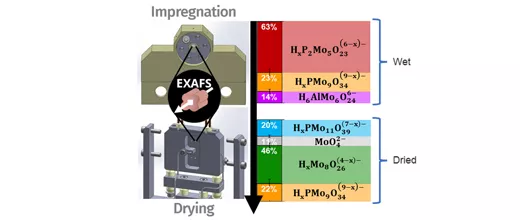
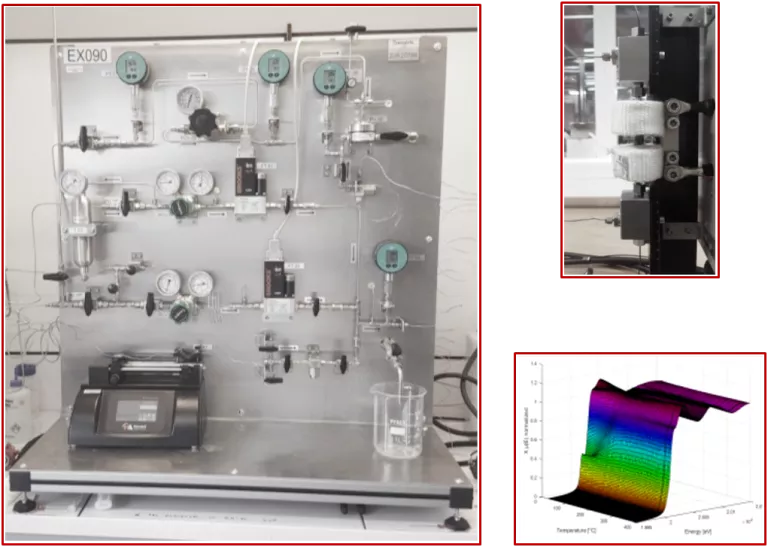
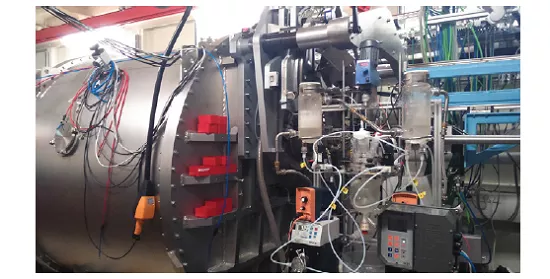
- The “in situ and/or operando” methodological approaches developed will make it possible to identify the properties of a heterogeneous catalyst and their evolution during its lifecycle, including during operation!
- The identification of a unique control parameter in the laboratory will provide exact knowledge about the mixing operating conditions to be applied in order to produce a paste with a specific porosity. It will also be possible to optimize the design of catalyst supports as a function of each target application.
Enjoy your reading !
Cécile Barrère-Tricca
> List of the nine scientific challenges (SC)