Professor of Chemistry, ETH Zürich
Member of IFPEN's Scientific Board
Whether in our smartphones or in the context of the energy transition, batteries already play a key role in our daily lives. They are complex “objects”, comprising compartments, components, electrolytes and multiple interfaces that enable reversible energy storage.
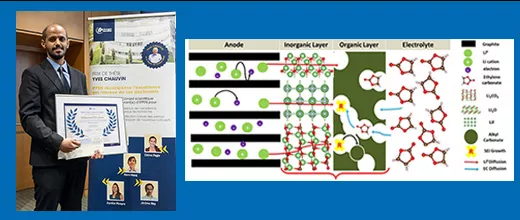
Like any object, batteries wear out. In doing so, they suffer a gradual loss of their storage capacity. In the case of lithium batteries, one of the aging mechanisms is linked to the formation of an ultra-thin layer (about one nanometer), which forms at the interface between the anode and the electrolyte. This layer, known as a Solid Electrolyte Interphase (SEI), grows over time, consuming the cyclable lithium and ultimately leading toa loss of capacity.
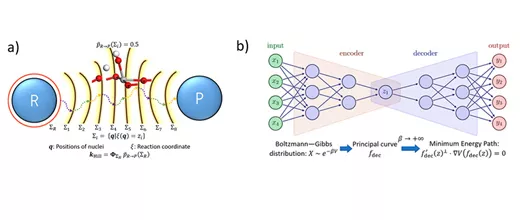
In order to increase the life-span of batteries, it is important to understand the origin of their life cycle and the growth mechanism of this ultra-thin layer. Given the complexity of ageing phenomena and the difficulties involved in characterizing them, one possible approach is modelling. That was the focus for the research conducted by Mohammed BIN JASSAR for his PhD thesis. In particular, he obtained an atomistic description of the decomposition of the electrolyte and a description of the growth of the SEI and associated loss of capacity. The evaluation of several calculation approaches enabled him to increase the efficiency of the simulations and to demonstrate the current limits of these approaches.
This thesis is a perfect illustration of the kind of doctoral work carried out at IFPEN, i.e., of excellent scientific quality while tackling concrete problems and issues of relevance to our lifestyles. It lays a solid foundation for understanding the aging mechanism of batteries, a first step towards predictive models and, ultimately the improvement of our daily lives. This is the reason why Mohammed has been awarded the 2024 IFPEN Yves Chauvin thesis prize.
We hope that you enjoy this issue.